Weeknotes #17
The incentives one

Weeknotes 📝
Longform ✍🏻
Incentives are part of every system, shaping how decisions are made and how work gets done, often without us even noticing. They aren’t inherently good or bad, but when we take the time to notice and talk about them, they can reveal valuable context. Understanding the incentives at play can help us see the bigger picture, not just our own part within it.
Incentives can be a tricky topic to explore in a neutral way, so credit to the Fédération Internationale de l'Automobile (FIA) for unintentionally serving up such a clear example at the Monaco Grand Prix this past weekend.
This blog post frankly wrote itself over the weekend as I watched a harsh lesson in incentives play out beautifully in real time during the F1 Monaco Grand Prix.
For anyone that doesn’t follow Formula 1, some context:
There are 10 teams and 20 drivers
Drivers compete for the Drivers Championship; teams compete for the Constructors Championship
Saturday is qualifying day, Sunday is race day. Saturday’s result sets the starting grid for Sunday
Only the top 10 finishers score championship points
Each car must run two different tyre compounds, meaning at least one pit stop is mandatory
Monaco is notorious for being a track where the qualifying grid predicts the finishing order, as overtaking is almost impossible
The first Monaco Grand Prix was held in 1929 and quickly became a symbol of speed, prestige and luxury. As the F1 cars have evolved in technology and size, it has more recently shifted into more of a procession than a race, serving as little more than background noise for disinterested billionaires. The most dramatic moments on track these days are collisions as the narrow layout leaves little room for anything else.
This year, the FIA tried to spice things up by enforcing two mandatory pit stops in an attempt to manufacture a bit more chaos and a more varied finishing order. The assumption was more stops = more strategy variation = more action.
Unfortunately but perhaps predictably, what actually happened was… worse than usual 🫠
The top three qualifiers finished exactly where they started. Lando Norris led from pole and won comfortably, with Leclerc in P2 and Piastri in P3. The remaining teams adapted quickly to optimise for bland efficiency and the post-race media interviews were full of frustrated drivers who felt the whole thing was a waste of time, with Verstappen likening it to Mario Kart:
What unfolded in the midfield behind the front-runners was a good example of teams responding to incentives - in this case championship points. Racing Bulls used team tactics to slow down the cars behind and generate a pit-stop gap for each other without losing track position, with Williams following suit.
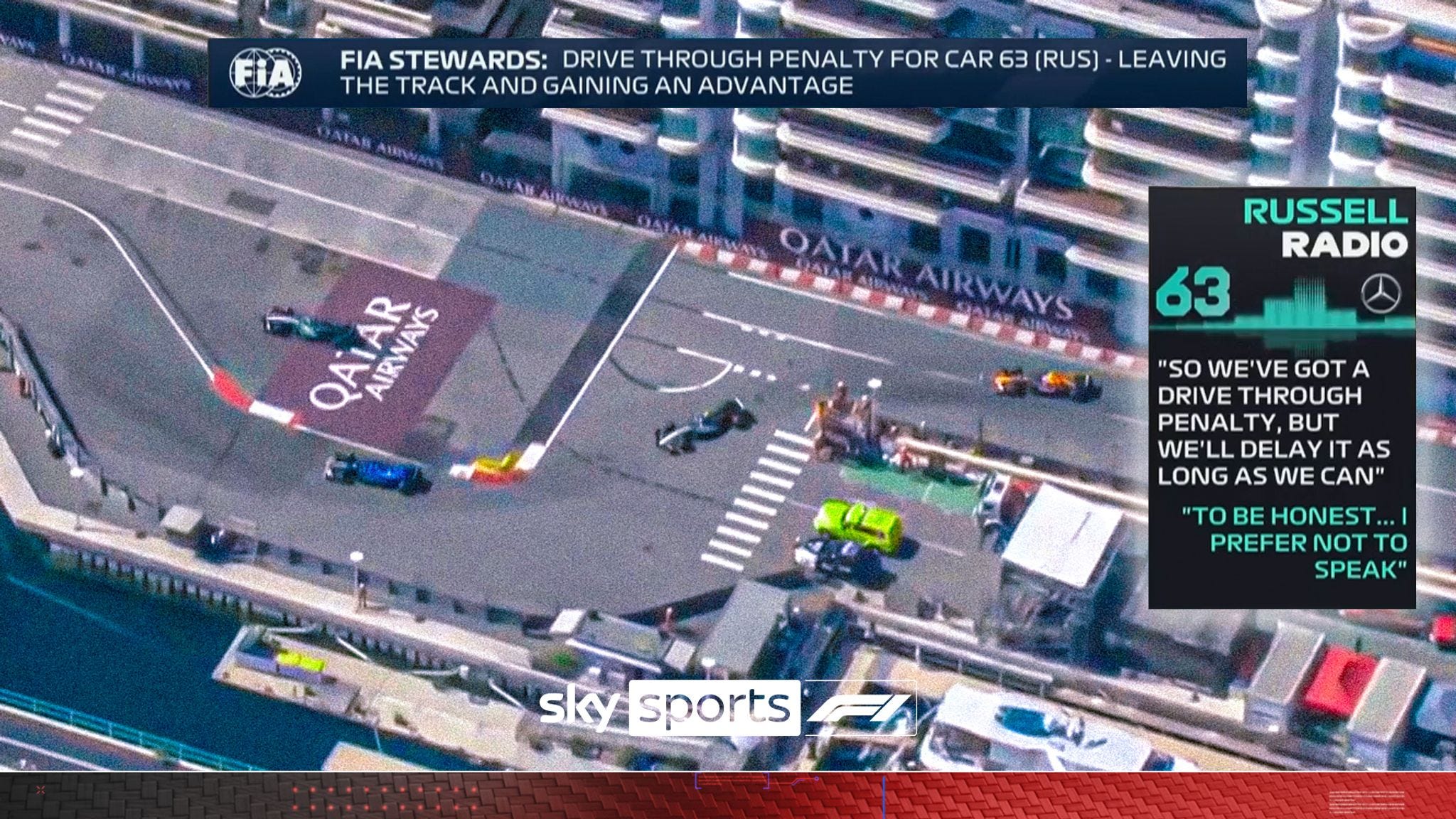
Frustrated by the pace and stuck behind Albon’s Williams, George Russell radioed in to Mercedes that he’d “take the penalty” for gaining an advantage, cutting the Nouvelle Chicane to overtake for 10th place and a championship point. Instead he was rewarded with a more severe drive-through penalty than the anticipated 5 seconds, ultimately dropping out of the points to 11th place.
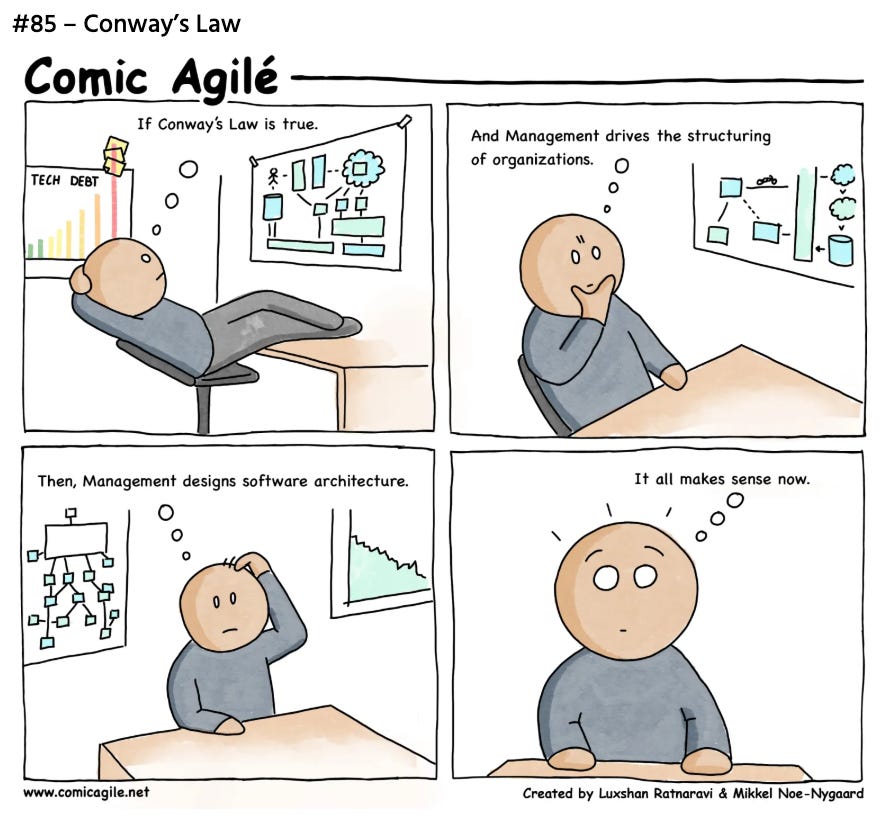
Conway’s Law says that the way a system behaves mirrors the structure it was designed within. Monaco was Conway’s Law in action. The track is so narrow that even when the FIA introduced new rules, the structure of the circuit still dictated how teams behaved.
The layout didn’t change, so the outcome didn’t either.
Being able to spot incentives and understand their underlying structures helps us to see our work as interconnected parts of a whole. This broader perspective can enable us to catch potential clashes or bottlenecks sooner.
All of this serves as a useful reminder in organisational design: if you want to see different behaviours and enable better outcomes, you need to shift the structure and realign the incentives.
If you don’t do both, you’ll just watch the same race play out again and again.
Pretzels 🥨
Dropping back down to 3rd place in the work F1 Fantasy League
Four weeks in a row with a single focus klaxon!! 📣
“Do not try and use scrum. That's impossible. Instead... only try to realise the truth. There is no scrum”
Presenting without practicing first
“Respectfully… why bother?”
Listening to 🎧
Reading 📚

Eating 🍕